Osteoarthritis
Osteoarthritis (OA) is a condition that affects the whole joint including bone, cartilage, ligaments and muscles. Although often described as ‘wear and tear’, OA is now thought to be the result of a joint working extra hard to repair itself.

Quick links
Being overweight increases your risk of osteoarthritis. The heavier you are, thehigher the risk.
Osteoarthritis may include:
- Inflammation of the tissue around a joint
- Damage to joint cartilage – this is the protective cushion on the ends of your bones which allows a joint to move smoothly
- Bony spurs growing around the edge of a joint
- Deterioration of ligaments (the tough bands that hold your joint together) and tendons (cords that attach muscles to bones).
1 in 5 Australians (22%) over the age of 45 have osteoarthritis.
Learn below about osteoarthritis and your treatment options.
There are many things you can do to live well with osteoarthritis.
What are the symptoms?
What causes it?
- knees: being overweight; having a previous knee injury; jobs involving kneeling; climbing and squatting
- hips: being overweight; having a previous hip injury; jobs involving lifting heavy loads (including farming); a family history of OA
- hands: a family history of OA; repetitive use or previous injuries to the hands; being overweight.
How is it diagnosed?
Consequatur, conse poribus exces mosti vernat veridium ipsum dolour beverum ipsum dollur besterium ipsum dolour.
What will happen to me?
Is there a cure for osteoarthritis?
What treatments are there for osteoarthritis?
- a weight loss program, if you are overweight
- an exercise program tailored to your condition and ability
- pain management, using medicines such as paracetamol or non-steroidal antiinflammatory drugs (NSAIDs), as well as learning to change the way you think about, and react to, pain
- devices such as braces, walking sticks, and shoe insoles
- joint replacement surgery, if your symptoms are no longer controlled with other therapies.
- Your local Arthritis Office has information on physical activity, healthy eating, medicines and surgery.
Your local Arthritis Office has information on physical activity, healthy eating, medicines and surgery.
What can I do?
1. See your doctor for treatment and advice. Your doctor will help you get the right treatment to manage your symptoms.
2. Learn about OA and play an active role in your treatment. Not all information you read or hear about is trustworthy so always talk to your doctor or healthcare team about treatments you are thinking about trying. Reliable sources of further information are also listed in the section below. Self management courses aim to help you develop skills to be actively involved in your healthcare. Contact your local Arthritis Office for details of these courses.
3. Learn ways to manage pain. Stay active. Exercise is strongly recommended for people with OA. It keeps your joints and muscles healthy and flexible and prevents other health problems. You may find it useful to see a physiotherapist or exercise physiologist for advice.
4. Have a healthy diet. There is no diet that will cure OA, but healthy eating and a diet aimed at maintaining an ideal body weight is recommended.
5. Balance your life. Learn about equipment that make daily tasks easier and how to balance rest and activity.
6. Acknowledge your feelings and seek support. As there is currently no cure for OA, it is natural to feel scared, frustrated, sad and sometimes angry. Be aware of these feelings and get help if they start affecting your daily life.
Resources and videos


Resources 1
MyOA and My Joint Pain Ria volent vollupt aquatem fugiae lacea veliquunt re velendicae nonsedit est que quas quatem ario
Osteoarthritis Booklets
Information and resources (English)
Arum dolorit voleseq
uisciatioria il evendi consequ
aspiet pernatq uodisquid
ut earum aut rehenietur sit
explign atioribus sinctaquide
sit evendis ium repel eos
illorepudant quis viduc
beverium ipsum dolour
besterium dolour.
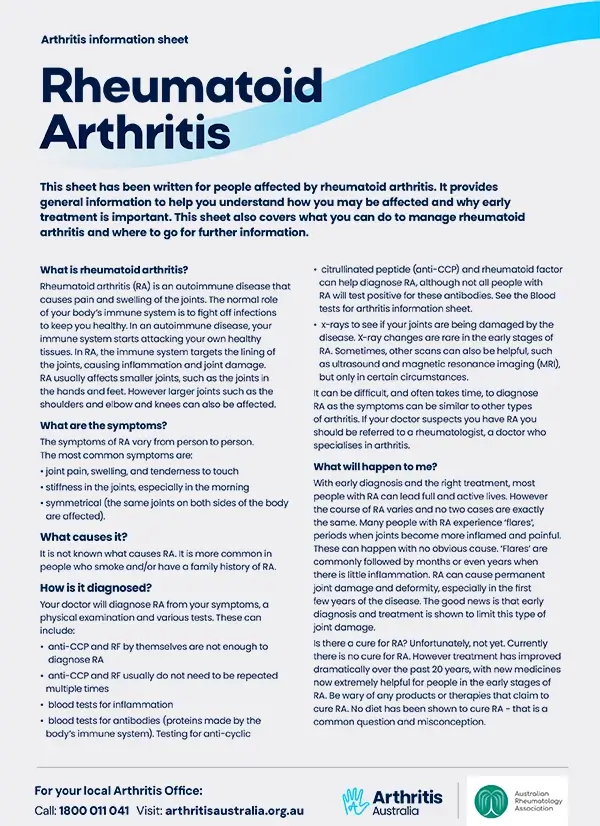
Osteoarthritis Info sheet
Information and resources (English)
Information and resources (French)
Information and resources (Arabic)
Information and resources (Assyria)
Information and resources (Cantonese)
Information and resources (Croatian)
Information and resources (Greek)
Information and resources (Indosian)
Information and resources (Italian)
Information and resources (Korean)
Information and resources 3
Information and resources 3
Information and resources 3
Information and resources 3
Information and resources 3
Information and resources 3
Explore MYOA, our online support program