
Quick links
- What is abatacept?
- What benefit can you expect from your treatment?
- Stopping abatacept
- How will your condition be monitored?
- How is abatacept given?
- What is the dosage?
- Can other medicines be taken with abatacept?
- Are there any side effects?
- What precautions are necessary?
- How to store abatacept
- Important things to remember
What is abatacept?
Abatacept (brand name Orencia) belongs to a class of medicines called biological disease-modifying antirheumatic drugs (biological DMARDs or bDMARDs).
These medicines block natural substances called cytokines. These are substances found in excessive amounts in the blood and joints of people with rheumatoid arthritis and juvenile arthritis.
The increased levels of cytokines cause inflammation, which results in symptoms of pain, joint swelling and stiffness, and can lead to joint damage.
By blocking T cell (a type of white blood cell) responses, abatacept reduces inflammation, lessens the symptoms and helps stop further joint damage.
What benefit can you expect from your treatment?
Unlike standard antirheumatic drugs (DMARDs), abatacept works relatively quickly. You may notice some relief of joint swelling, pain and stiffness within the first 4-8 weeks of treatment.
Stopping abatacept
If abatacept treatment is stopped for more than a few weeks, there is a risk that your condition may worsen. Continue with your treatment unless advised by your doctor or unless side effects develop (see Side effects).
If you stop abatacept for any reason you must contact your doctor. Failure to do so may mean that your continued treatment may no longer be subsidised.
How will your condition be monitored?
In view of the current prescribing restrictions for all bDMARDs:
- Abatacept will only be started if your disease is active and if standard treatments have been unsuccessful.
• It will not be continued unless it helps your condition. This will be assessed at least 12 weeks after the start of treatment.
• Blood tests will be required during your treatment to monitor your condition and to check the treatment is working.
• The frequency of blood tests will depend on what other medicines you are taking and what other illnesses you might have. Your rheumatologist will tell you how often you need blood tests.
How is abatacept given?
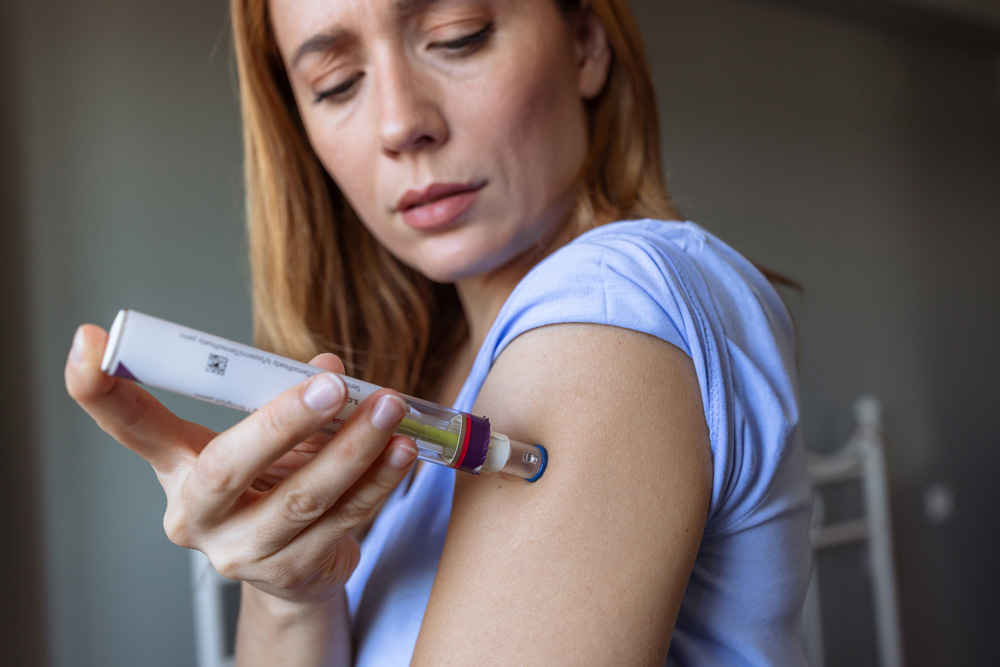
Abatacept is given as a drip (infusion) into the vein, or as an injection under the skin of the abdomen or thigh.
The infusion normally takes thirty minutes. This is followed by a one-hour period of observation to make sure you don’t have any side effects. Additional doses are usually given at 2 and 4 weeks after the first dose. After this, doses are usually given every 4 weeks.
When given as an injection under the skin (subcutaneous injection), doses are given weekly.
The subcutaneous treatment may begin with a single dose intravenous infusion (loading dose) in some cases.
Abatacept is given in combination with the DMARD methotrexate.
What is the dosage?
For infusions, the dose is based on your weight, so each person’s dose may be different.
The subcutaneous dose is a standard 125mg weekly injection.
Can other medicines be taken with abatacept?
Can other medicines be taken with abatacept?
Abatacept may be used with other arthritis medicines including:
• other DMARDs such as methotrexate
• steroid medicines such as prednisolone or cortisone injections into the joint
• anti-inflammatory medicines (NSAIDs) such as naproxen (Naprosyn) or ibuprofen (Brufen, Nurofen)
• pain medicines such as paracetamol.
Abatacept cannot be used with other bDMARDs.
There are separate information sheets for the medicines mentioned above.
Are there any side effects?
Are there any side effects?
You might experience side effects with your treatment. Contact your doctor if you have any concerns about possible side effects. Many side effects disappear when abatacept treatment is stopped.
Most common possible side effects
• Common possible side effects include:
− headaches, runny nose, dizziness or cough
− sore throat, heartburn or nausea
− back, arm or leg pain
− urine infections
− rash.
• Stomach and bowel discomfort may also occur.
• As abatacept affects the immune system, mild infections, particularly of the upper respiratory tract (e.g. colds, sinusitis) may occur more often than usual. Treatment with abatacept may need to be temporarily stopped so contact your doctor for advice.
Less common or rare possible side effects
• Side effects can occur during the infusion itself. These may include fever or chills, itch, chest pain, shortness of breath or changes in blood pressure. These effects are more likely to occur during the first or second infusion.
• Mild pain, swelling, bruising or itching may occur at the injection site (for sub-cutaneous doses). It is therefore important to change around the injection site.
• Serious infections such as tuberculosis (TB) are rarely seen, and screening for TB is needed before treatment begins (see Precautions).
• Rarely abatacept may cause an allergic reaction with itchy, red skin or a rash.
• It is still unclear from research if there is an increased risk of cancer due to abatacept treatment, but registry data has been reassuring (see Precautions)
What precautions are necessary?
Infections
• If you have an active infection of any kind, treatment with abatacept will not be given until the infection is treated successfully.
• Abatacept will not be given if you have active untreated tuberculosis (TB) or HIV (AIDS) infection as it is likely to make these conditions worse.
• If you have latent (inactive) TB, preventative anti-TB treatment will be started at least 4 weeks before abatacept. The anti-TB treatment will need to be taken for up to 9 months, depending on which treatment is needed.
• Hepatitis B or C infection may not necessarily exclude treatment with abatacept.
• Because of the risks associated with infection the following tests may be conducted before commencing treatment with abatacept:
− blood tests for hepatitis B and C
− blood test for tuberculosis (TB)
− HIV tests are required for those who are at risk of this infection.
Use with other medicines
• Abatacept can interact with other medicines. You should tell all your doctors about all medicines you are taking or plan to take. This includes over-the-counter or herbal/naturopathic medicines.
• You should also mention your treatment when you see other health professionals.
• The pain reliever paracetamol and combined pain medicines such as Panadeine and Panadeine Forte can be used while you are getting abatacept provided you take them as directed.
Vaccines
• If you are on abatacept it is recommended you should not be immunised with ‘live’ vaccines such as MMR (measles, mumps and rubella), OPV (oral polio virus), BCG (Bacillus Calmette Guerin) or yellow fever. Talk with your rheumatologist before getting any vaccines.
• Non-live vaccines, including influenza, COVID-19 boosters, pneumococcal vaccines, non-live herpes zoster vaccines
(Shingrix), are safe and recommended in those who are eligible.
• For more information on vaccination including the COVID-19 vaccination go to the ARA website: https://rheumatology.org.au/For-Patients/Medication-Information/Vaccinations/Vaccinations-in-Rheumatology
Surgery
• If you require surgery for any reason, treatment with abatacept will be stopped before surgery.
It will be restarted again after the operation at a time determined by your surgeon and rheumatologist. Treatment is usually restarted once the wound is healed and if there is no infection present.
Use with alcohol
• You may drink alcohol while taking abatacept. However, if you are also taking methotrexate, you should be particularly cautious about your alcohol intake.
• It is not known precisely what level of drinking is safe when on abatacept, however there is general agreement that 1 to 2 standard drinks taken once or twice a week is unlikely to cause a problem.
• It is strongly advised not to drink more than four standard drinks at one time, even if it doesn’t happen often.
Cancer risk
• Lymphoma, a cancer of lymph glands, is found more commonly in patients with severe active rheumatoid arthritis than in the general population. To date there is no evidence to suggest that this medicine increases lymphoma.
• Large registry studies have not reported an increased risk of cancers with exposure to abatacept. Although abatacept is generally not recommended in patients with a history of prior cancer, it may be a reasonable treatment choice in certain circumstances. Discuss this with your doctor.
• For general cancer prevention, stopping smoking and taking skin cancer prevention measures are recommended. It is important to use sunscreen and avoid prolonged sun exposure. A yearly skin check is strongly recommended, in particular, looking for melanoma.
• Talk to your doctor if you have any concerns about issues relating to cancer risk.
Use in pregnancy and when breastfeeding
• Not enough is known regarding the possible side effects of abatacept. If you plan to become pregnant, it is important to discuss this with your doctor, as each case is different.
• You can breastfeed when taking abatacept.
• It is safe to father a child while being treated with abatacept.
• More detailed information is available at https://rheumatology.org.au/For-Healthcare-Professionals/Clinical-Resources/Pregnancy-Prescribing-Info
How to store abatacept
• Keep the medicine refrigerated (between 2-8 degrees), even when travelling.
• It can be taken out of refrigeration and brought to room temperature 30-45 minutes before injection.
• Keep all medicines out of reach of children.
Important things to remember
• While taking abatacept you must see your rheumatologist regularly to ensure
the treatment is working and to minimise any possible side effects.
• If you stop abatacept for any reason you must contact your doctor. Failure to do so may mean that your continued treatment may no longer be subsidised.
• If you are worried about any side effects, you should contact your rheumatologist
as soon as possible.
• If you are injecting abatacept under the skin (subcutaneously) remember to change the injection site each time.
• It is important to tell your doctor if you have had cancer or if you develop cancer.
• If you are taking abatacept and plan to become pregnant you must discuss the
timing with your doctor.
This Information Sheet has been prepared using materials obtained from various sources which have been reviewed by the Australian Rheumatology Association (ARA). It contains general information only and does not contain a complete or definitive statement of all possible uses, actions, precautions, side effects or interactions of the medicines referenced. This information is not intended as medical advice for individual conditions nor for making an individual assessment of the risks and benefits of taking a particular medicine. Decisions regarding the assessment and treatment of patients are the sole responsibility of the treating medical professional, exercising their own clinical judgment and taking into account all of the circumstances and the medical history of the individual patient.
ARA has used all reasonable endeavours to ensure the information on which this Information Sheet is based is accurate and up to date. However, the ARA accepts no responsibility or liability for the accuracy, currency, reliability and/or completeness of the information contained in this Information Sheet. To the maximum extent permitted by law, the ARA expressly disclaims any liability for any injury, loss, harm or damage arising from or in connection with use of and reliance on the information contained in this Information Sheet.
Page updated May 2026