What is gout?

Gout is a type of arthritis. It occurs when uric acid (urate) levels in the blood are unusually high.
This can happen when our bodies make too much uric acid, or our kidneys cannot get rid of the uric acid quickly enough.

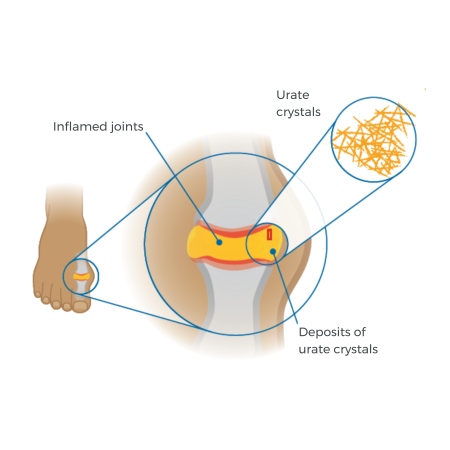
The excess uric acid forms tiny urate crystals, often inside small joints like the big toes, ankles, fingers or wrists. These crystals irritate the joint causing swelling and pain. This is called a gout flare (attack). Even after the flare settles, if crystals stay in the joint, there is always a risk of future flares.

How is gout diagnosed?

Your doctor will diagnose gout based on your symptoms and if you have urate crystals found in your joints.

Taking Control of your gout | Booklet

A practical guide to understanding and managing gout, covering treatments, diet and lifestyle choices, and building your healthcare team. Learn how medicines work, what to do during a flare, and where to find support so gout doesn’t get in the way of everyday life.

What about gout? | Factsheet

A quick guide to the essentials of gout, including what causes it, common symptoms, flare triggers, and how it’s diagnosed. Understand why gout isn’t your fault and follow the step-by-step pathway from diagnosis to ongoing management.

Gout explained

Symptoms of gout:

A flare is usually the first sign of gout. Symptoms can happen very quickly, often overnight.

Symptoms of a gout flare include:
– Joint pain, redness, heat and swelling that can be painful to touch
– Difficulty walking or moving the joint.

Do certain foods trigger a gout flare?
Yes, some foods high in purines may trigger a flare. Purines are chemicals found naturally in the body and in many foods, we eat and drink. Our bodies turn some purines into uric acid.

Gout and diet | Factsheet
Sort the facts from the myths about how what you eat affects gout and learn which foods and drinks can trigger a flare. Discover why diet alone can’t control gout, and get practical tips to lower your flare risk alongside your medicines.

Myth: Gout is caused by drinking alcohol.
Fact: People who do not drink alcohol are still diagnosed with gout. If you have gout, alcohol may trigger a flare, but it is not the sole cause.
Myth: Taking vitamin C can help lower my uric acid levels.
Fact: While vitamin C is important for your health, there is no evidence that taking vitamin C lowers uric acid levels. Vitamin C will not reduce the severity or frequency of gout flares.
Myth: Drinking concentrated cherry juice will reduce flares.
Fact: You may have heard that drinking cherry juice can prevent gout flares. However, there is no strong evidence that drinking cherry juice will reduce flares or lower uric acid levels.

Learn more about gout through our video collection. People living with gout and health professionals answer common questions about diagnosis, treatment and management, and share personal stories. Whether you're newly diagnosed or have had gout for years, these videos sort the facts from the myths, and offer practical advice and support to help you live well with gout.

What can I expect after a gout diagnosis?

Understand your condition

Learn about gout, its symptoms, triggers, and ways to manage it.

Speak with your healthcare team

Talk to your doctor about your treatment options, and any other health conditions you have. Some people may need to be referred to a rheumatologist, a doctor who treats arthritis.

Start taking medicine to lower uric acid levels

Gout is a lifelong condition that can be controlled with a medicine you take everyday.

Ongoing management

Keep track of your symptoms, diet and any triggers you find. Take your medicine daily and see your health professional if your flares aren’t improving with treatment

My gout plan: for people taking regular gout medicine

A practical planning tool to record your gout medicines, track your uric acid levels, and note what to do when a flare happens. Fill it in with your doctor to stay on top of your treatment and know when to seek help.

Deciding how to manage your gout: for people not on regular gout medicine

A decision aid for people with gout to consider what to expect from different management actions – daily medicines, lifestyle changes, or treating each flare as it happens. Use it to think about what matters to you and discuss your management plan with your doctor.

Quality Use of Medicines Alliance

Helping consumers and health professionals make safe and wise decisions about medicines and diagnostics. Funded by the Australian Government through the Quality Use of Diagnostics, Therapeutics and Pathology Program.

Resources

A hub for trusted, evidence-based resources – information sheets, booklets, videos, decision-making tools and condition-specific programs.

Let’s talk about Gout -Flares

Gout Plan

Deciding how to manage your gout

Gout (Aboriginal and Torres Strait Islander)

Gout and diet

Taking control of your Gout

Scroll to Top

Search